Youth Planetary Transition Council
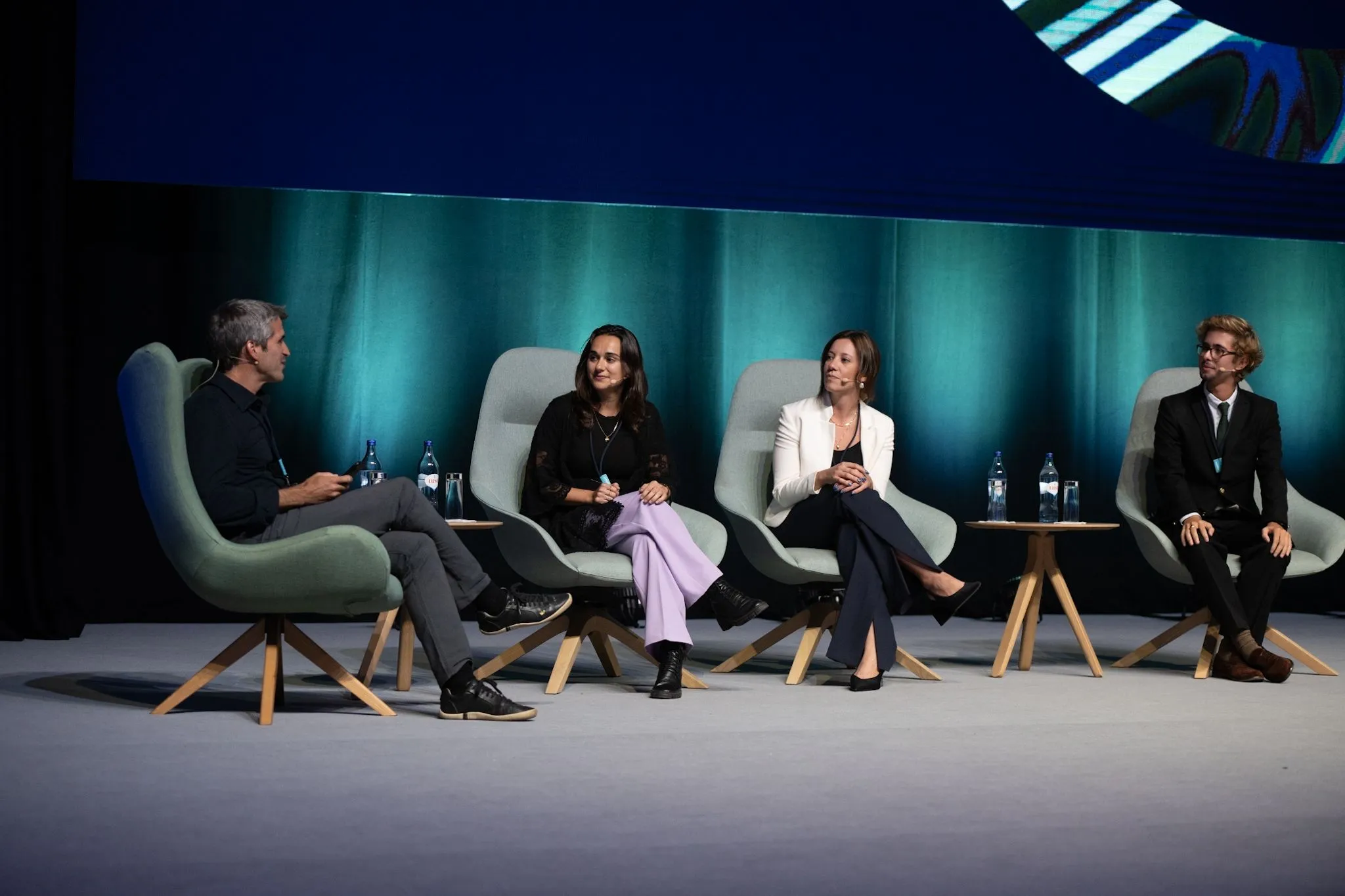
The Youth Planetary Transition Council is an international platform established in 2026 and chaired by João Maria Botelho to strengthen the participation of young leaders in the discussions and decisions shaping the transition of our economies and societies.
Developed within Generation Resonance and the wider Earth Transition Gathering initiative, the Council brings together young professionals, researchers, entrepreneurs and emerging leaders from different countries and fields of knowledge. Its purpose is straightforward: to create a permanent space for younger generations to contribute to international dialogue on the challenges that will define the decades ahead.
Climate change, energy, technology, economic transformation, demographic change, health, finance and the future of democratic institutions cannot be considered in isolation. Nor can they be addressed exclusively within national borders. The Council therefore works across disciplines and geographies, encouraging cooperation between young people and institutions and strengthening dialogue between generations.
Its approach takes inspiration from the principles reflected in the United Nations Pact for the Future and the Declaration on Future Generations, particularly the importance of meaningful youth participation, intergenerational responsibility, international cooperation and the need to consider the long-term consequences of decisions taken today.
An international network
The Council is being developed as a genuinely international community. Its growing network brings together young people connected to:
Europe. Portugal, Spain, France, Italy, Monaco, Belgium, the Netherlands, Germany, Switzerland and the United Kingdom.
The Americas. The United States, Canada, Brazil, Mexico, Colombia, Argentina and Chile.
Africa. Angola, Mozambique, Cape Verde, São Tomé and Príncipe, Guinea-Bissau, Nigeria, Kenya and South Africa.
Asia, the Gulf and Australia. India, Singapore, the United Arab Emirates and Australia.
New countries, institutions and partnerships are progressively joining the network. This expanding geographical footprint reflects the Council’s ambition to create a platform that is genuinely cross-border, cross-generational and capable of bringing different regional perspectives into a shared conversation on the future.
This geographic diversity is central to the project. The transition will not take the same form everywhere. Different countries face different economic, social, environmental and institutional circumstances. Effective international cooperation therefore requires the participation of people who understand those realities directly.
The Council provides a common framework through which these perspectives can meet. It is intended neither as a representative parliament nor as a symbolic youth forum. It is a platform for participation, exchange and cooperation, through which members can contribute to discussions, develop initiatives, connect institutions and bring perspectives from their own countries and professional communities into a wider international conversation.
From participation to contribution
Meaningful participation requires more than presence. The Council is therefore organised around substantive involvement in projects, dialogues and international initiatives.
Members are encouraged to contribute according to their own fields of knowledge and experience, whether in law, economics, climate policy, finance, technology, energy, international relations, entrepreneurship, science, culture or civil society. The objective is to create opportunities for young people to work alongside universities, companies, public institutions, researchers and decision-makers on questions that have a direct bearing on their future.
This work builds on the experience developed through Generation Resonance, including youth consultations, the Youth Charter presented in the context of COP28, the Portuguese Climate Summit, international climate engagement, intergenerational dialogues and projects connecting young people with policymakers, academics, business leaders and civil society. The Youth Planetary Transition Council gives that work a broader international framework.
ETG Talks
ETG Talks is one of the central platforms being developed on the road to the Earth Transition Gathering: an international series of conversations designed to connect emerging generations with the people shaping the major transformations of our time.
Hosted across elite schools, leading universities and partner institutions, ETG Talks brings together students and young professionals with voices from academia, business, public policy, science, international organisations and civil society.
The format is intentionally different from the conventional conference model. Rather than relying on keynote speeches or one-directional interventions, each session is built around conversation: a small number of participants, typically two or three, engaging in a focused exchange before opening the discussion to the wider academic or institutional community. The objective is not simply to discuss global challenges, but to create spaces where ideas can move across generations, disciplines and borders and where conversations can lead to further research, cooperation, partnerships and practical initiatives.
Portugal serves as the initial setting for the development and refinement of the model. From there, and supported by the international partnerships already being built around the initiative and by the reach and experience of its Board of Trustees, ETG Talks is intended to expand into the United Kingdom, the United States, India and Brazil, before progressively reaching other regions.
This international development is conceived not as the replication of a fixed format, but as the creation of a shared global framework capable of adapting to different academic, institutional and cultural contexts. Each geography should bring its own priorities, questions and perspectives into the wider conversation.
Over time, the ambition is to build a network of high-level conversations across major academic and institutional environments worldwide, creating a platform through which a new generation can engage directly with those shaping policy, markets, science and society, while connecting local insight to a broader international agenda.
Areas of work
The Council and the wider ETG platform consider the transition through five interconnected areas.
- Planetary restoration addresses climate change, oceans, biodiversity, natural resources and the protection and restoration of ecosystems.
- Energy and industrial transition considers energy systems, infrastructure, industrial transformation, competitiveness and the conditions required for a transition that is economically viable as well as environmentally sustainable.
- Wellbeing and resilience looks at health, education, cities, demographic change, social cohesion and the ability of communities to adapt to long-term change.
- Culture, sport and society considers the role of culture, communication, sport and social institutions in shaping behaviour, identity and collective action.
- Capital and systemic transformation examines investment, finance, technology, governance and the institutional frameworks required to convert long-term objectives into implementation.
These areas are not treated as separate agendas. The Council approaches them as different dimensions of the same transition.
Towards the Earth Transition Gathering
The Council and ETG Talks form part of the longer-term development of the Earth Transition Gathering, planned for 2028.
The period leading to the Gathering is intended to be substantive in its own right. Rather than concentrating participation in a single international event, the project is designed to develop progressively through university dialogues, international partnerships, research, youth engagement and smaller cross-border conversations. The process can therefore connect local discussions with a wider international agenda and allow ideas developed in different countries to inform the eventual Gathering.
Over time, this creates an international community rather than simply an audience for an event. The Earth Transition Gathering will provide a common point of convergence for that work: bringing together younger generations, institutions and established leaders to consider how international cooperation can respond more effectively to the economic, environmental, technological and social transformations ahead.